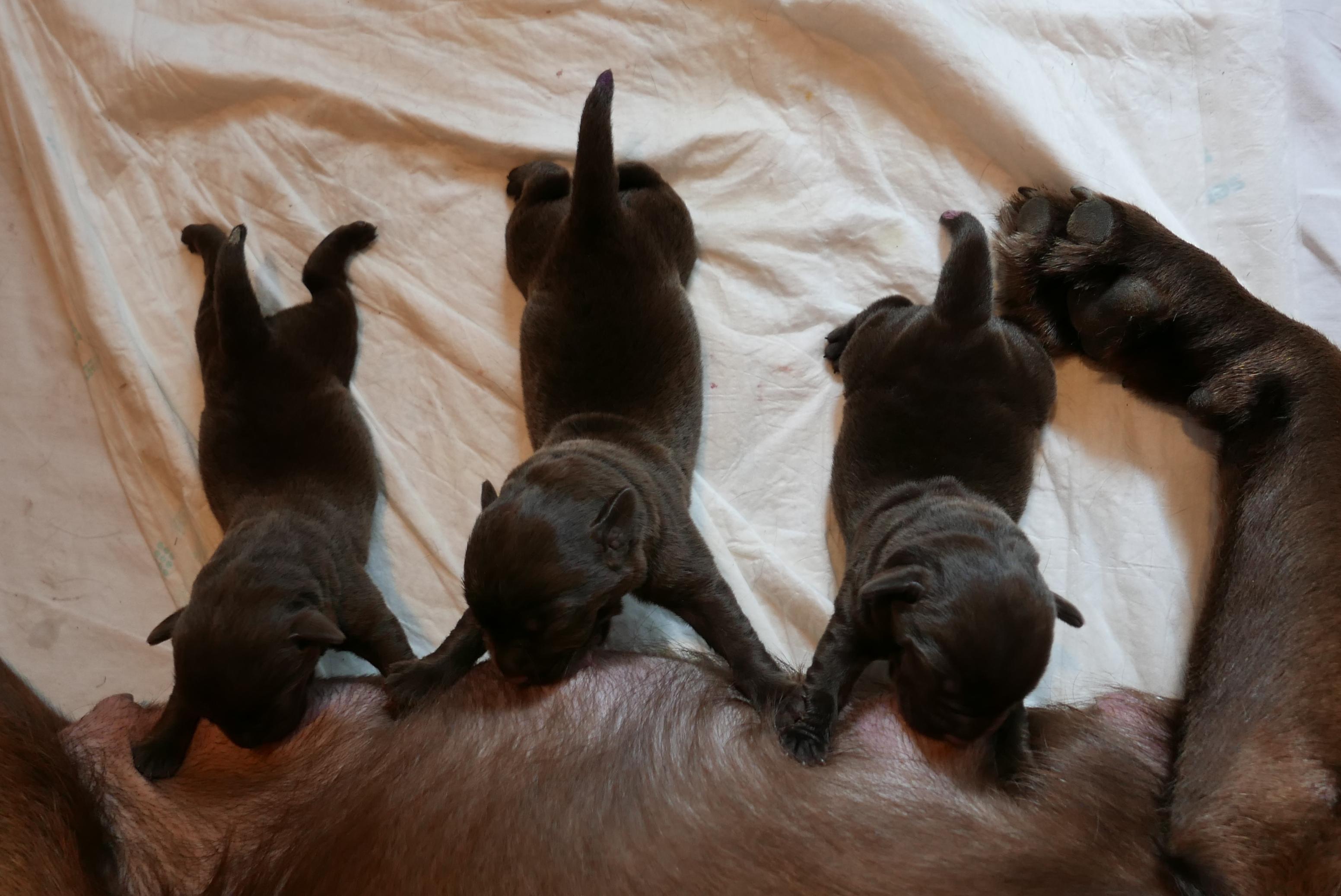
The First 30 Days With Your New Puppy
What actually happens between the day a puppy comes home and the day they feel like your dog. Week by week.
By doggy.net team · April 21, 2026 · 11 min read
Your puppy will come home and you will feel two things. One: a strong urge to give them a perfect first day. Two: a quiet panic about whether you are ready.
Both are normal. Here is what actually happens in the first thirty days, and what matters most at each stage.
Day one: slow
The most important thing on day one is boredom.
Not excitement. Not introductions. Not a big dinner with the extended family meeting the puppy. Your puppy has just left the only home they have ever known. They have been in a car. They are in a new smell, a new floor, a new light. Your job on day one is to be calm and available, and to not add anything else.
Offer water. Offer a small amount of the food the breeder sent you home with. Let them explore one or two rooms, not the whole house. Show them where their crate is. Show them where they can go to the bathroom outside. That is day one.
Week one: the routine starts
By the end of week one, your puppy needs to have seen the shape of a normal day. Not every day. Not every variable. But the basic rhythm.
- Wake up, go outside, come in, eat
- Nap
- Short play session, go outside
- Nap
- Training — five minutes of sit, down, name recognition
- Nap
- Outside before bed
- Crate
That rhythm will repeat for the next fifteen years in some form. The sooner your puppy learns it, the sooner they relax into it.
House training is the other priority. Assume they will have accidents. Clean with an enzyme cleaner, not a regular cleaner — the smell is what keeps them returning to the same spot. Do not punish accidents. Interrupt, redirect outside, praise when they finish outside.
Week two: sleep and socialization
Most families report the second week is harder than the first. The novelty has worn off for the puppy. They start pushing back. They test the boundaries of the crate. They get nippier.
This is normal. Every puppy hits this. It is not a behavior problem. It is a teething and energy management problem.
Socialization starts this week. Safe socialization — not dog parks yet. Hold your puppy on a park bench and let them watch the world. Invite one or two friends over. Drive them to a drive-through so they hear different sounds from the back seat. The goal is exposure, not meeting every dog in the neighborhood.
Week three: confidence
By week three most puppies are sleeping through the night. They know their name. They are doing sits and downs reliably for treats. They have a favorite spot in the house.
This is the week most families say *okay, we have a dog now.* The panic from week one has faded. The routine is real. The crate is a place the puppy goes willingly.
This is also the week most injuries happen. Puppies at three weeks in their new home get cocky. They run into things. They eat things they should not eat. They jump off couches. Puppy-proof one more time at the end of week two, because week three is when they test it.
Week four: you are tired, and that is fine
If you feel tired at the end of week four, you are doing it right. A puppy is a full-time job for the first month. By week four most families have established:
- Consistent house training (occasional accidents still expected)
- Crate comfort, sleeping through the night
- Reliable recall in a quiet room
- Sit, down, name, and the start of leave-it
- A vet visit for the first-round vaccinations
- A grooming introduction if the breed needs one
What you probably have not established yet: leash walking in public, off-leash recall, meeting new dogs calmly, riding in the car without complaint, staying home alone for more than an hour.
That is fine. Those take months, not weeks. Month one is about baseline. The rest of puppyhood builds on that baseline.
The piece most families underweight
Sleep. Puppies need sixteen to eighteen hours of sleep a day. Most behavior problems in the first month trace back to overtired puppies. If your puppy is biting too much, if they are too hyper, if they will not settle — they are usually not under-exercised. They are over-tired.
Enforce naps. Crate them when they start getting loose. The crate is not a punishment, it is a reset.
If something is wrong
Call your breeder. A good breeder wants that call. They have seen eight weeks of this puppy before you did. They know the parents. They will tell you straight up whether what you are seeing is normal or whether it needs a vet.
If your breeder is not someone you feel comfortable calling, that is worth knowing now. It is a data point for the next dog.
Thirty days from today, you will have a dog. Not a puppy figuring out a new house — a dog who knows where they live. That is the job of month one. Everything after that builds from there.